The Real Reason Community Fees Spike — and the Plan That Prevents It


Every board eventually reaches the same uncomfortable moment. A roof gives out, an elevator modernization can't wait, or the annual budget simply stops covering what the community costs to run. Someone finally says it out loud — "Do we have to raise dues?" — and the room goes quiet.
It's tempting to treat that moment as the problem. It isn't. The dues conversation is a symptom. Fees almost never spike because of the expense itself — they spike because the expense arrived as a surprise. And surprises are exactly what a reserve study, used well, is built to eliminate.
Fee spikes aren't caused by rising costs. They're caused by a planning gap.
Major costs are predictable. Roofs, elevators, boilers, plumbing stacks, parking structures, and façades all have known lifespans. None of them fail without warning. What catches a community off guard isn't that these costs exist — it's the timing, and the funding gap that opens when they come due faster than the reserve was prepared for.
When a reserve is underfunded and a major component reaches end of life, a board is left with only two levers: a steep dues increase or a special assessment. Both land hard. Both feel like a crisis. And both are usually the result of years of quiet decisions to keep dues flat instead of funding the future. Deferred maintenance doesn't disappear — it compounds. So does the bill.
That's the pattern behind nearly every fee spike. Not bad luck. A plan that was never built, or never followed.
What a reserve study is actually for
A reserve study isn't a compliance document to file and forget. It's a long-term funding model, and done well it does three things.
It inventories every major component the community is responsible for — roofs, mechanicals, structural elements, common-area assets — and estimates how much useful life each has left.
It projects the cost to repair or replace those components across a multi-decade horizon, priced for tomorrow's inflation rather than yesterday's invoices.
And it builds a funding plan: how much the reserve needs each year to meet those obligations without a shock to owners.
That third piece is where the value lives. A reserve study doesn't just tell you what will break. It tells you what to set aside, starting now, so that nothing breaks the budget when it does.
Inflation is widening a gap most boards can't see
Here's the part that quietly turns a manageable plan into a crisis. Many communities are still operating on reserve estimates that are several years old — and in that time, construction, labor, and material costs have moved sharply. A project budgeted at $500,000 in an older study can easily come in at $850,000 today.
If your funding plan is still anchored to outdated numbers, you're under-saving every single month and won't feel it until the bids come in. That's the strongest argument against treating a reserve study as a one-time exercise. To protect you, it has to keep pace with reality — not fall a few years behind it.
The shift: from a static study to a Living Reserve Study®
This is why more boards are moving past the traditional model. A conventional reserve study captures a single moment in time. It's accurate the day it's delivered and drifts out of date from there, while costs climb, timelines shift, and components age. By the time anyone notices the gap between the study and reality, the funding plan is already behind.
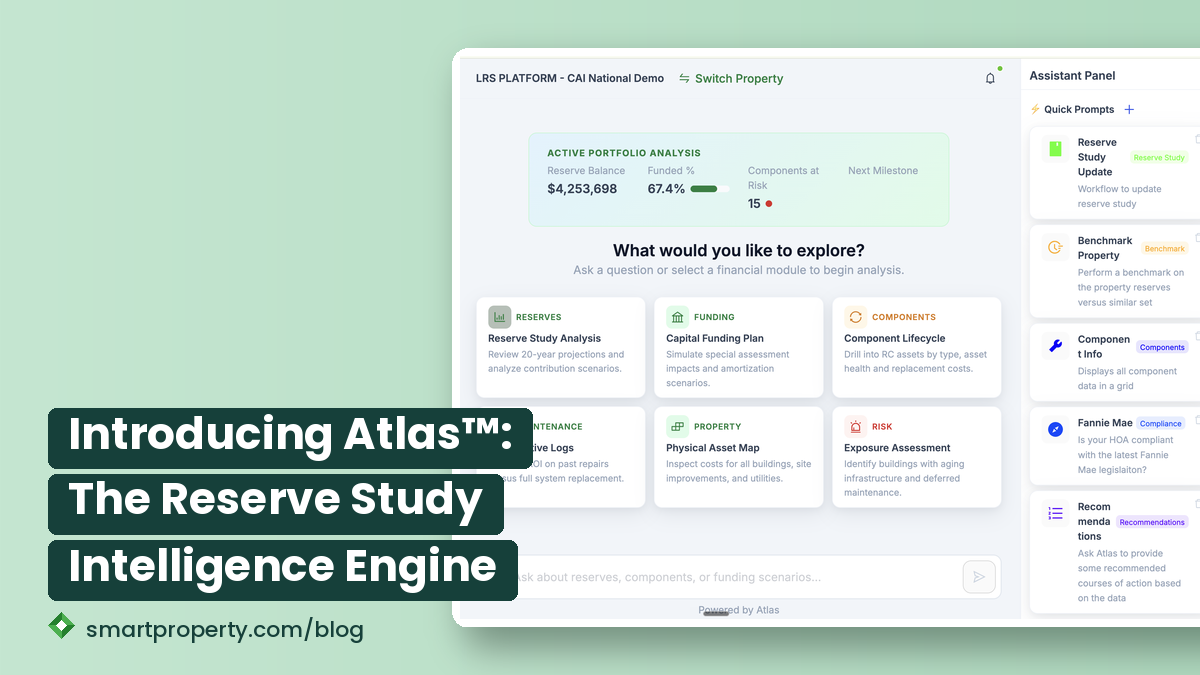
A Living Reserve Study® closes that gap. Instead of a report you revisit every few years, it's a continuously current view of your community's assets and finances — updated as costs move, projects advance, and reserves are spent. It behaves less like a document and more like a working financial and asset plan: a predictable roadmap you can actually steer by.
That distinction is what turns spike prevention from theory into practice. A static study tells you what the plan looked like at one point. A living one tells you whether you're still on track today — and what to adjust now, while small corrections are still enough to matter.
It's no longer a niche approach, either. Professional management companies and self-managed communities alike have increasingly adopted the Living Reserve Study®, and it's become a recurring topic at national and local community association events. The reasoning is consistent wherever it comes up: keeping the plan current is the smart way to stay ahead of costs instead of reacting to them.
Why this replaces fee shocks with fee stability
The communities that avoid painful assessments aren't spending less. They're planning earlier. When a board funds its reserve on a steady, data-backed schedule, the cost of major projects is absorbed gradually — spread across years of modest, predictable contributions instead of one punishing increase.
That changes the entire conversation with owners. Instead of defending an emergency, the board is explaining a plan. Instead of "We need $12,000 from every unit by spring," it's "We've been funding this all along, and we're on track." Predictability protects communities — financially and politically — and it's the single most effective tool a board has for lowering the tension around every dues vote.
How to put your reserve study to work
If you want to get ahead of the next fee spike, a few moves matter more than the rest.
Keep your study current. If it's more than a few years old, the numbers beneath your funding plan may no longer reflect what projects actually cost — and a living, regularly updated study removes that risk entirely.
Read the funding plan, not just the component list. The point isn't to know what will fail. It's to know what to contribute each year so failures never become assessments.
Fund consistently, not reactively. Small, steady increases tied to the plan are far easier for owners to accept than the large, sudden ones that follow years of flat dues.
And translate it for your community. Owners support what they understand. A clear, visual summary of where the money goes and why turns reserve funding from a source of distrust into a source of confidence.
The bottom line
Fees don't spike because buildings get expensive. They spike because the plan to pay for those buildings was missing, outdated, or ignored. Your reserve study is that plan — and kept current, read closely, and funded consistently, it turns the dreaded "Do we raise dues?" conversation into a routine one.
The expense was always coming. The surprise didn't have to.
SmartProperty turns reserve studies into a Living Reserve Study® — a clear, data-backed funding roadmap that stays current as costs and projects change, so communities plan in decades, not budget cycles. See exactly where your community stands: schedule a 20-minute call, and we'll walk you through what a board-ready Living Reserve Study® looks like for your property.